English and Mathematics
| At Thomastown Meadows Primary School, Literacy and Numeracy are at the heart of our teaching and learning program. We are committed to providing students with high-quality learning experiences that build strong foundations for lifelong learning and active citizenship. Our Weekly Program
Teachers work collaboratively each week to plan engaging lessons that build on student understanding and develop essential skills. Foundation Oral Language ProgramOur Foundation students participate in an additional oral language program designed to build vocabulary, comprehension, and expressive language through explicit and direct instruction. Literacy Support and AssessmentStudents take part in regular formative and summative assessments. Those requiring extra support in reading are identified early and receive intensive small-group instruction targeting:
Parents are invited to meet with classroom teachers and reading support staff to discuss progress and learn how to support learning at home. Our Approach to NumeracyWe are passionate about developing numerate learners who can apply mathematical thinking in everyday life. Our Maths program fosters a growth mindset and focuses on the key proficiencies of:
Students build a deep number sense while exploring content areas such as Number, Algebra, Measurement, Space and Statistics. We believe every student can learn and thrive, and our community works together to build confidence, independence, and a strong sense of achievement. For more information, visit the Victorian Curriculum 2.0. Integrated StudiesOur Integrated Studies program provides students with rich, meaningful learning experiences that strengthen understanding of the world and build essential skills for life. Curriculum Design
Teachers collaboratively design these units to ensure they reflect student needs and embed key 21st-century learning skills. Skills DevelopedStudents build knowledge and skills across a range of areas, including:
These experiences promote:
Through hands-on and inquiry-based learning, students deepen their world understanding and continuously develop their capabilities over time.
|
|
Reporting
Reporting and Assessment
At Thomastown Meadows Primary School, we are committed to providing clear, meaningful, and timely information about student learning and progress.
Student Reports
We provide written reports twice a year, outlining student achievement against the Victorian Curriculum Standards. Reports are delivered digitally through the Compass platform for easy access by families.
In addition to academic progress, students are also assessed on key skills and capabilities that are aligned with the Victorian Curriculum.
Parent–Teacher Communication
We believe that strong partnerships between home and school support successful learning. To ensure parents have a clear understanding of their child’s growth:
-
Meet the Teacher conferences take place early in the year
-
3-Way Student-Led Conferences occur mid-year, giving students the opportunity to reflect on their learning, share achievements, and discuss goals alongside their teacher and family
Ongoing Communication
Our teachers are committed to maintaining open and supportive communication with families. We welcome both formal and informal conversations to ensure every student is given the best opportunities to succeed.
Digital Technologies
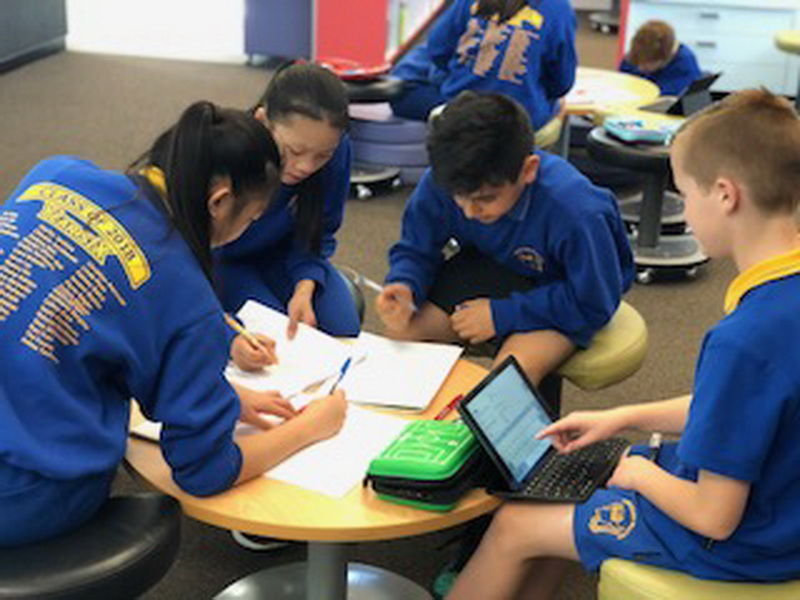
At Thomastown Meadows, we are excited to integrate iPads and laptops into teaching and learning from Foundation to Year 6. These devices support students to:
-
Capture and reflect on their learning
-
Develop higher-order thinking skills
-
Publish and present work
-
Create digital solutions
-
Collaborate with others
These skills help students thrive in a global, technology-rich world. We have an onsite technician who supports teachers and students daily to ensure devices are used effectively and are accessible to all.
Technology Use Guidelines
TMPS follows the Department of Education’s recommendations for daily technology use:
-
Foundation – Year 2: Up to 15 minutes per day
-
Years 3 – 6: Up to 90 minutes per day
We also prioritise cyber safety and digital citizenship, ensuring students are safe, responsible, and ethical users of technology.
|
Digital Technologies CurriculumThe Digital Technologies curriculum empowers students to become confident and creative developers of digital solutions. Students actively engage in the processes of:
Students learn to safely and ethically exploit the capacity of information systems. Digital solutions are created through the application of computational, design, and systems thinking, alongside practical technical skills. Key ConceptsUnderpinning Digital Technologies learning are key concepts that provide a framework for knowledge, practice, and problem-solving:
These concepts correspond to the elements of computational thinking and can be applied in both digital and non-digital contexts. They help students understand the organisation, representation, and automation of information and digital solutions, forming a language and perspective that will underpin future technologies. Practical LearningStudents explore how information systems operate and learn to transform data into meaningful digital solutions. This approach builds skills in problem-solving, creativity, collaboration, and critical thinking, preparing students to meet current and future technological challenges. For more details on how ICT supports learning in Digital Technologies, please see our [Information Communication Technologies and Digital Technologies PDF]. |
|